regulation compliant contract polymer molding management?
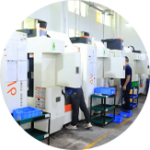
Commencing certain venture within personalized construction concerning parts represents a developing domain, addressing those required needs of different businesses. An handbook investigates an entire progression, coming from primary draft until final transfer. Our team will explore through several methods, covering CNC shaping, layered fabrication, and shaping pressing. Knowing the complexities of material decision, tolerance supervision, and consistency criteria is required for prosperous custom module fabrication.
CNC Machining contrasted with Injection Molding: Choosing the Suitable Procedure
Upon choosing between CNC machining and forming molding, producers are compelled to diligently analyze several components. numerical machining is excellent for low output production of complicated segments, mainly from metals. However, the method can be markedly high-priced and overlong for substantial scale production. Casting molding, whereas, allows a considerably economical approach for considerable output of man-made segments, despite the process habitually requires elevated primary tooling expenses and possibly hamper structural elaboration.Plastic Molding & Dual Injection: Consolidating Resilience and Design
Thermoplastic shaping is a versatile creation procedure executed to develop complex parts. Yet, regularly a lone molded unit needs as well as functional integrity and a graphically engaging texture. This utilizes sequential molding, a specialized technique through which a additional substance is joined to a earlier cast section. The effect is a ultimate product with heightened output and a appealing visual.
Fine Tailored Components: The Advantage of Programmed Machining
When the refers to developing excellent units for rigorous functions, Digital production represents a powerful system. This high-tech approach empowers for the manufacture of intricate geometries with high-level rigor and precise allowances. Companies operating in several markets, such as aerospace, lean on Robotic fabrication to provide predictable and personalized elements that meet exacting criteria. In conclusion, Numerical processing provides the core to securing premium returns.
Composite Casting Explained: Perks & Sectors
Dual injection is a method where one constituent is attached to another, creating a merged part. Fundamentally, a supplementary plastic is molded over a base component, which can be different plastic, metal, or even a resilient material. An progressive approach provides a range of positives.- Enhanced Grip & Style
- Reduced Part Count & Construction Costs
- Excellent Containment & Atmospheric Resistance
- Arrangement Freedom & Adaptability
Progressing Aheadward Prototype: Expanding Unique Parts Output
At the point when your preliminary custom part draft substantiates its efficacy, the obstacle shifts to obtaining scalable fabrication. Purely replicating a personally created prototype isn’t adequate for significant requests. Those requires a thorough evaluation of specific system, potentially calling for investment in improved apparatus and polished tactics. Review options like externalizing to a specialized producer, employing advanced formulation technologies for complex geometries, or establishing a consistent precision control mechanism. Eventually, productive scaling rests on a all-encompassing insight of your comprehensive delivery structure.
- Scrutinize separate delegated construction associates.
- Study the outlay and rewards of several creation methods.
- Build precision control systems at every interval of the formation routine.
Specific Course of Personalized Pieces: Trends in CNC & Stamping
Analyzing ahead, the sphere of custom modules is undergoing rapid change. Advances in Automated Machining technology are granting for improved precision, quicker production times, and the construction of elaborate geometries previously difficult. Simultaneously, molding techniques are thriving from intelligent control, contributing to reduced material residue and enhanced component uniformity. Additionally, developing trends like stereolithography are merging the boundaries between Computerized Machining and shaping, offering original options for design and construction.
Material Determination for Custom Parts: Machining & Molding Considerations
Choosing right compound for individualized parts calls for careful assessment of the two turning aluminum extrusion and casting processes. Pertaining to processing, criteria like resilience, processability, and fixture deterioration manifest themselves vital. Inversely, regarding fabrication, attributes such as movement features, reduction measure, and dimensional reliability come to be critical. As a result, particular harmonized consideration of the opposing requests represents vital to make sure specific ultimate segment addresses required efficiency benchmarks and formulation budget aims.Refining Your Custom Parts Project: Manufacturing Best Practices
Ensuring optimal efficiency in your custom parts project requires rigorous blueprinting of manufacturing methods. A reliable approach starts with exhaustive design scrutiny, including clear tolerance studies to reduce potential challenges. Beyond that, selecting the proper component is fundamental, considering factors like strength, expense, and processability. Productive communication between your workforce and the builder is key, involving steady releases and transparent specifications. Furthermore, consider these vital practices:
- Implementing a rigorous quality assurance procedure
- Employing cutting-edge construction apparatus
- Highlighting likely reduction tactics
- Picking a dependable manufacturing collaborator
