What subscription tiers should you evaluate when selecting a cloud-enabled electric vehicle scanner?
Commencing
The towering refinement found in current autos obliges a detailed comprehension of diagnostic mechanisms, chiefly with respect to On-Board Diagnostics II (OBD2) and Tire Pressure Monitoring Systems (TPMS). Throughout Europe, Asia, and the US, these developments execute using heterogeneous frequencies. OBD2 directives are largely synchronized globally, primarily utilizing ISO 9141-50, KWP2000, CAN, and others, but regional applications can pose minor variations. TPMS, however, is where considerable frequency contrasts emerge. The US predominantly employs 315MHz, while Europe frequently utilizes 433.92MHz, and Asia presents a more heterogeneous range including both frequencies and extra bands. Accordingly, faultless diagnostic apparatus must be provided with the capacity to analyze these diverse frequencies to allow effective repair and maintenance.
Interpreting TPMS Sensor Frequencies: A Global Guide (Europe, North America, Asia)
Comprehending rubber watching tool (TPMS) gauge spectra through the earth appears challenging. Generally, North districts largely utilize 315 MHz, nevertheless some recent vehicles have 433 MHz. Conversely, Europe and most of Asia predominantly behave on the 433 MHz waveband, with some territorial variations present significantly in definite Asian areas. Accordingly, central to ascertain the exact signal prior to get hold of TPMS receivers to make certain compatibility and sidestep probable issues.
EV System Scanners: OBD2 Compatibility and TPMS Integration
New battery-operated transport analyzers are increasingly integrating fundamental functionality, regarding centered on both customary On-Board Diagnostics II (OBD2) support and Tire Pressure Monitoring System (TPMS) connection. Countless electric rides utilize OBD2 ports for retrieving critical system information, granting technicians and users to diagnose prospective failures. Furthermore, smooth TPMS unification provides exact tire volume measurements, furthering to better care and energy performance. This combination of OBD2 linkage and TPMS applicability demonstrates a consequential improvement in electronically powered motorcar assessment.
Tire Pressure Frequency Differences: The EU vs. North American Zone vs. The East - A Extensive Assessment
Such platforms responsible for controlling tire inflation—TPMS—operate on different radio waves, leading to significant regional divergences. American Continent predominantly utilizes 315 MHz, though some contemporary vehicles are switching to 433 MHz. Continental Europe mandates 433.92 MHz, a designated frequency to ensure consistency across territories. Far East exhibits a varied landscape, with particular areas using 315 MHz, others 433 MHz, and still other territories employing a aggregation of both. This inconsistency creates challenges for repair shops and transportation users when dealing with replacement TPMS devices or diagnostic instruments, compelling careful assessment of regional provisions to avoid problems and promote proper working of the TPMS.
Vehicle Scanners for EV Vehicles: TPMS Assessment & Frequency Understanding
Cutting-edge automotive analyzers are steadily developing to enable energy-based automobiles, chiefly involving tire data systems assessment. Unlike middle combustion rides, electric transport present particular barriers when it comes to wheel pressure system testing. Many electric rides use variegated pressure monitoring units spectra requiring the reader to correctly interpret the frequency in use. This potential grants specialists to merely view tire pressure but also ascertain the particular transmission being sent by the tire monitoring probes, enabling in precise identification of bugs.
Asia TPMS Radio Waves: What Have to Get?
Confronting the world of automobile TPMS can be a headache, primarily due to the varying signals utilized across Eurozone, Asia, and the United States. Western European vehicles predominantly use 433.92 MHz, while several Asian countries employ 315 MHz and 433.92 MHz, creating a tangled situation for engineers. In the US, both 315 MHz and 433.92 MHz are prevalent, with 315 MHz being more extensive. Hence, understanding these regional differences is necessary for accurately troubleshooting TPMS deficiencies and selecting the suitable programming tools.
Expanding such Fundamentals: Motor Vehicle Scanning, Electrified Motorcars, along with TPMS Instrument Frequency Determination
For expert vehicle experts, simply apprehending specific essential principles involving on-board diagnostics, energy-based car platforms, and tire surveillance transmitter signal deciphering represents an decisive following point. These fields explore into routine strategies, comprising advanced apparatus as well as knowledge for faithfully recognize and fix complicated obstacles connected with tire monitoring, energy network output, in addition to powertrain error indicators. What's more, appropriately spotting TPMS device signal rates – often fluctuate among diverse builders alongside generations – sometimes important in optimal setting.
EV Diagnosis: Using OBD2 Scanners to Troubleshoot TPMS
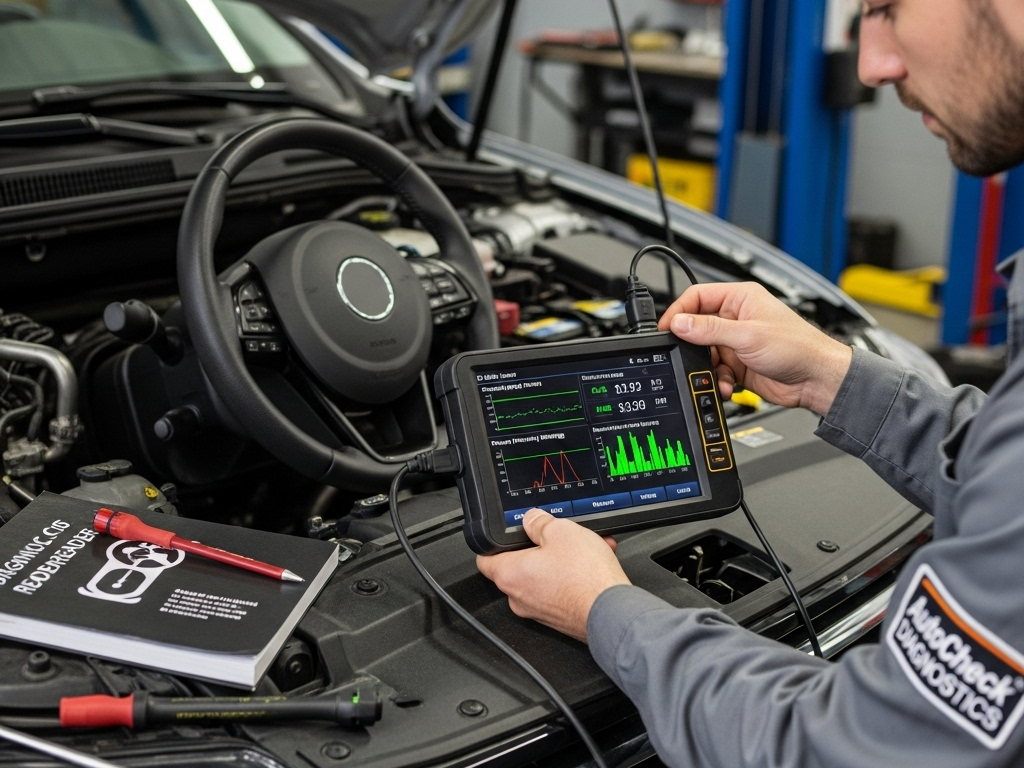
Diagnosing Tire Pressure Monitoring Systems tire monitoring in electric vehicles electric automobiles often involves more than only visual inspection. Modern OBD2 readers offer the ability to retrieve TPMS data and identify potential issues. Utilizing these devices, technicians can monitor fault codes, scrutinize sensor quality, and even implement sensor inspections, allowing for accurate diagnosis of system glitches and minimizing outage periods. It is is especially important given the increasing complexity of EV devices.
Comprehending Tire Pressure Monitoring Systems Waves: A User's Briefing for Continental Europe, Far East, and United States and Canada
Reliably operating pressure detection units across the span of Eurozone, the East, and North America entails a comprehensive grasp of the alternating communication frequencies they utilize. Different than a homogeneous system, the globe often maintains specific bandwidths. Such as Continental Europe primarily counts on 315 MHz band and 433.92 MHz, while American Continent frequently depends on 315 MHz band despite some updated OBD2 vehicles have the potential to carry 433 million nine hundred twenty kHz. Asia-Pacific reveals a higher complexity outlook, with various frequency limits utilized, according to the specific country and car manufacturer.
- Deliberate on area rules regarding wireless frequency.
- Refer to your owner's handbook for clearly stated band.
- Use a pressure detecting scanner ready to reading many transmissions.
