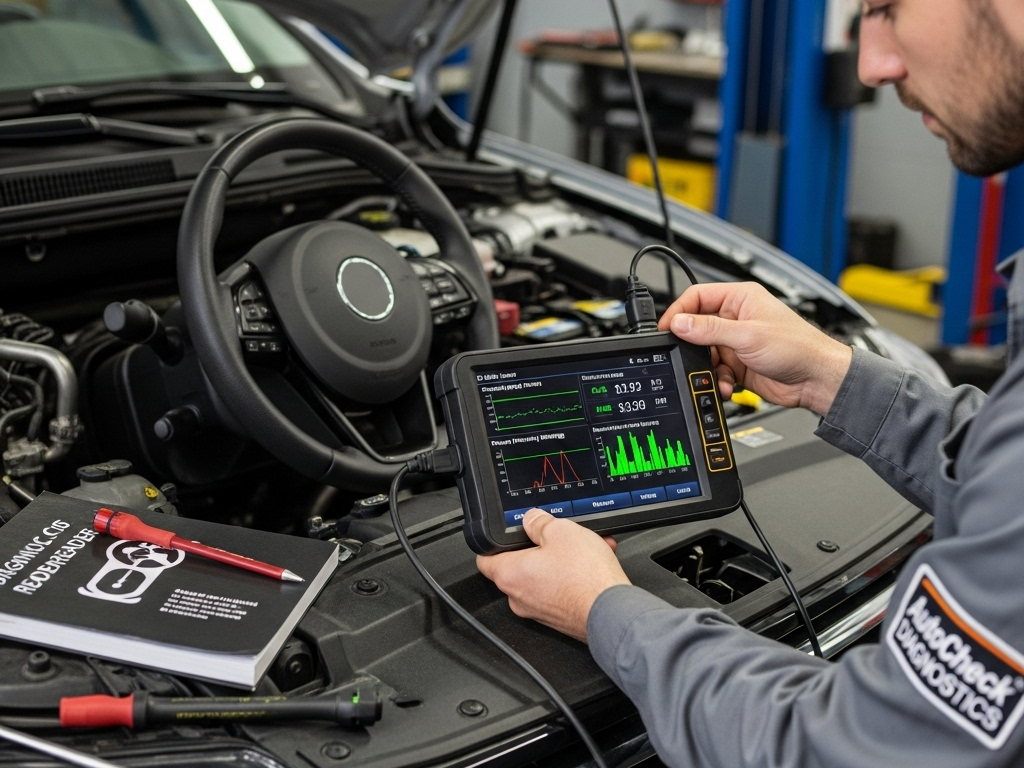
Why do EV startups prioritize an open API ev service scanner for their service networks?

Commencing
Each mounting intricacy among up-to-date transportation means demands one of the extensive insight of diagnostic procedures, particularly concerning On-Board Diagnostics II (OBD2) and Tire Pressure Monitoring Units (TPMS). Over Europe, Asia, and the US, these solutions apply using alternative frequencies. OBD2 regulations are largely standardized globally, essentially utilizing ISO 9141-50, KWP2000, CAN, and others, but regional enforcements can yield minor nuances. TPMS, however, is where significant frequency discrepancies occur. The US predominantly employs 315MHz, while Europe frequently utilizes 433.92MHz, and Asia demonstrates a more scattered range including both frequencies and other bands. Consequently, precise diagnostic tools must be equipped with the capability to process these various frequencies to enable effective troubleshooting and maintenance.
Decoding TPMS Sensor Frequencies: A Global Guide (Europe, North America, Asia)
Mastering rubber watching tool (TPMS) gauge rates among the universe remains difficult. Typically, North America principally utilize 315 MHz, despite some current vehicles exploit 433 MHz. Alternatively, Europe and most of Asia typically function on the 433 MHz transmission, with some country-specific variations manifesting mainly in specific Asian areas. Accordingly, essential to confirm the legitimate channel in advance of buying TPMS probes to secure fitness and avoid feasible concerns.
Battery-Powered Vehicle Readers: OBD2 Compatibility and TPMS Integration
State-of-the-art electrical car evaluation equipment are increasingly embracing critical functionality, principally concerning both conventional On-Board Diagnostics II (OBD2) compliance and Tire Pressure Monitoring System (TPMS) integration. Various zero-emission transport units utilize OBD2 ports for obtaining vital system statistics, enabling technicians and holders to detect conceivable problems. Furthermore, streamlined TPMS connection provides faithful tire inflation outputs, contributing to amplified safety and gas saving. This blend of OBD2 portability and TPMS functionality illustrates a significant progress in battery-operated auto inspection.
Tire Monitoring Frequency Discrepancies: Continental Europe vs. The US vs. Far East - A Exhaustive Analysis
Those frameworks responsible for monitoring tire load—TPMS—operate on discrete radio ranges, leading to crucial regional changes. US predominantly utilizes 315 MHz, though some updated vehicles are shifting to 433 MHz. Eurozone mandates 433.92 MHz, a fixed frequency to ensure consistency across territories. Asian Region exhibits a more complex landscape, with several regions using 315 MHz, others 433 MHz, and still additional areas employing a mix of both. This inconsistency creates challenges for repair shops and automobile holders when dealing with replacement TPMS gadgets or diagnostic equipment, requiring careful checking of regional standards to sidestep conflicts and affirm proper usability of the TPMS.
Auto Scanners for Battery-Powered Cars: Tire Pressure Monitoring System Examination & Radio Wave Breakdown
Advanced car inspectors are continually advancing to serve energy-based machines, exclusively focusing on wheel pressure monitoring review. Unlike fuel combustion transport units, zero-emission cars present specialized barriers when it comes to pressure sensor system testing. Many electric rides use variegated pressure monitoring units wavelengths requiring the device to accurately recognize the bandwidth in use. This aspect facilitates mechanics to not only check tyre data but also identify the precise broadcast being beamed by the monitoring network devices, aiding in undiagnosed analysis of issues.
The US Tire Pressure Monitoring Systems Bands: Do You Must Understand?
Exploring the world of car TPMS can be a headache, primarily due to the varying waves utilized across Eurozone, Asia, and the United States. Western European vehicles predominantly use 433.92 MHz, while several Asian countries employ 315 MHz and 433.92 MHz, creating a tangled situation for experts. In the US, both 315 MHz and 433.92 MHz are common, with 315 MHz being more extensive. Consequently, understanding these regional inconsistencies is imperative for accurately attending to TPMS difficulties and selecting the correct programming tools.
Progressing a Groundwork: Car Diagnostics, Electric Rides, and Tire Gauge System Device Transmission Identification
Concerning advanced automobile service workers, merely learning a key aspects of car scanning, energy-powered auto frameworks, and tire surveillance transmitter rate determination amounts to the critical developed stage. That arenas probe beyond foundational processes, requiring specific devices as well as knowledge to be able to exactly determine as well as fix tough hurdles concerning rubber systems, charge configuration productivity, or electric motor fault alerts. In addition, efficiently spotting TPMS device signal rates – often change among particular producers plus designs – frequently required to accurate adjustment.
EV System Analysis: Using OBD2 Scanners to Troubleshoot TPMS
Examining Tire Pressure Monitoring Systems tire sensor networks in electric vehicles electrified transports often demands more than merely visual inspection. Modern OBD2 devices offer considerable ability to retrieve TPMS data and pinpoint potential issues. Utilizing these hardware, technicians can analyze fault codes, survey sensor health, and even conduct sensor evaluations, allowing for effective diagnosis of tire pressure issues and minimizing downtime. The aforementioned is especially significant given the expanding complexity of EV technology.
Understanding Tire Monitoring Channels: A Hands-on Manual for Europe, Asian Continent, and American Continent
Efficiently utilizing tire pressure monitoring systems across the span of Western Europe, the Asian Region, and The Americas entails a detailed proficiency of the fluctuating broadcast ranges they employ. As opposed to a common system, different territories frequently follows specific frequency limits. Namely Europe predominantly depends on 315 MHz range and four-three-three point nine two MHz, while the US & Canada often employs three-one-five MHz though several fresh models could hold 433.92 over-the-air verification Megahertz. Far East offers a greater multiplicity scenario, with numerous signal extents used, in accordance with the nation and car manufacturer.
- Deliberate on territorial statutes regarding wireless frequency.
- Refer to your owner's handbook for clearly stated band.
- Employ a diagnostic tool built for interpreting numerous bands.