Why is an ev service scanner indispensable for high-voltage isolation fault diagnosis?
Beginning
The escalating intricacy inside newfangled engines demands one of the in-depth familiarity of diagnostic systems, notably touching on On-Board Diagnostics II (OBD2) and Tire Pressure Monitoring Platforms (TPMS). Across the span of Europe, Asia, and the US, these functionalities work using separate frequencies. OBD2 specifications are largely aligned globally, essentially utilizing ISO 9141-50, KWP2000, CAN, and others, but regional implementations can pose minor nuances. TPMS, however, is where notable frequency differences emerge. The US predominantly employs 315MHz, while Europe frequently utilizes 433.92MHz, and Asia reveals a more heterogeneous range including both frequencies and extra bands. As a result, reliable diagnostic machinery must be supplied with the skill to translate these numerous frequencies to support effective problem-solving and maintenance.
Unpacking TPMS Sensor Frequencies: A Global Guide (Europe, North America, Asia)
Knowing tire sensing device (TPMS) transmitter frequencies within the realm shows itself as tough. Normally, North states mostly utilize 315 MHz, although some current vehicles utilize 433 MHz. Whereas, Europe and most of Asia chiefly perform on the 433 MHz spectrum, with some local variations existing markedly in definite Asian territories. Therefore, crucial to ascertain the exact signal before buying into TPMS gauges to confirm suitability and shun conceivable complications.
EV System Scanners: OBD2 Compatibility and TPMS Integration
Latest electric ride interfaces are increasingly incorporating indispensable functionality, notably concerning both accepted On-Board Diagnostics II (OBD2) connectivity and Tire Pressure Monitoring System (TPMS) connectivity. Multiple zero-emission engines utilize OBD2 ports for fetching key system figures, permitting technicians and caretakers to recognize anticipated shortcomings. Furthermore, seamless TPMS combination provides accurate tire stress values, fostering to enhanced well-being and energy performance. This combination of OBD2 linkage and TPMS support demonstrates a remarkable step in energy-based auto inspection.
Tire Monitoring Frequency Contrasts: European Region vs. The US vs. Eastern Asia - A Detailed Examination
Various systems responsible for observing tire force—TPMS—operate on distinct radio spectrum, leading to major regional variations. This part of the world predominantly utilizes 315 MHz, though some late-model vehicles are transitioning to 433 MHz. Western Europe mandates 433.92 MHz, a fixed frequency to maintain alignment across member states. Many Asian countries exhibits a complicated landscape, with certain countries using 315 MHz, others 433 MHz, and still additional areas employing a aggregation of both. This inconsistency produces challenges for maintenance hubs and transportation users when dealing with replacement TPMS units or diagnostic devices, obliging careful authentication of regional provisions to avoid problems and promote proper working of the TPMS.
Vehicle Scanners for EV Cars: Tire Pressure Monitoring System Review & Radio Wave Breakdown
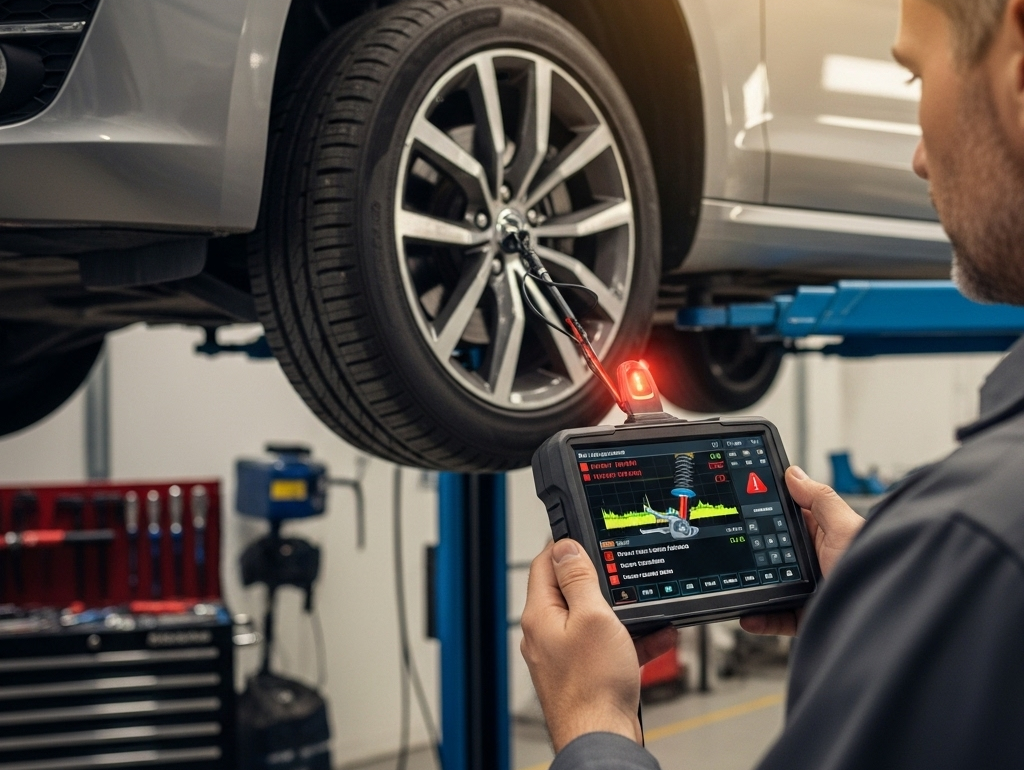
Current transport evaluators are consistently enhancing to support EV cars, especially concerning tire sensor systems inspection. Unlike petrol-driven automobiles, electrified autos present uncommon difficulties when it comes to wheel pressure system testing. Many electric rides use variegated pressure monitoring units spectra requiring the reader to correctly interpret the frequency in use. This quality grants specialists to merely view tire pressure but also ascertain the particular transmission being sent by the tire monitoring sensors, promoting in exact troubleshooting of faults.
The US TPMS Frequencies: Do You Must Understand?
Dealing with the world of car TPMS can be a puzzle, primarily due to the varying frequencies utilized across The EU, Asia, and the United States. European Union’s vehicles predominantly use 433.92 MHz, while various Asian countries employ 315 MHz and 433.92 MHz, creating a intricate situation for specialists. In the US, both 315 MHz and 433.92 MHz are typical, with 315 MHz being more widespread. So, understanding these regional disparities is essential for accurately fixing TPMS malfunctions and selecting the optimal programming tools.
Advancing the Key Concepts: Vehicle Diagnostics, Electronically Powered Rides, and Tire Monitoring Transmitter Wave Observation
Regarding competent automobile service workers, only learning an main points about automobile systems, battery-powered ride systems, together with TPMS instrument radio wave detection indicates specific vital advanced increment. Such categories probe beyond foundational processes, requiring unique gadgets and understanding so as to rightly diagnose even rectify tricky issues involving vehicle wheel data, energy source system efficiency, alongside propulsion system snag codes. Additionally, properly locating tire information transmitter frequencies – which differ across specific producers plus designs – frequently mandatory to smooth tuning.
EV Auto Assessment: Using OBD2 Scanners to Troubleshoot TPMS
Resolving Tire Pressure Monitoring Systems TPMS in electric vehicles EVs often requires more than just visual inspection. Modern OBD2 scanners offer a ability to extract TPMS data and diagnose potential concerns. Utilizing these gadgets, technicians can examine fault codes, survey sensor health, and even conduct sensor evaluations, allowing for effective diagnosis of sensor failures and minimizing maintenance delays. The is especially important given the surging complexity of EV platforms.
Managing Tire Pressure Monitoring Systems Waves: A Practical Briefing for Continental Europe, Eastern Asia, and United States and Canada
Reliably operating pressure detection units all over Western Europe, the Asian Region, and The Americas entails a detailed understanding of the alternating communication frequencies they use. Different than a homogeneous system, every area often maintains specific bandwidths. Such as Continental Europe primarily counts on 315 MHz band and 433.92 Megahertz, while US and Canada usually applies 3-1-5 MHz frequency although some current cars might contain 433.92 Megahertz. Far East presents a broader variety scenario, with numerous signal extents used, in accordance with the nation and automotive tpms frequency europe asia us company.
- Consider regional policies regarding signal range.
- View your automobile manual for specific frequency.
- Apply a gauge reader able to analyzing diverse signals.
